
Wake County EMS to Limit Use of Lights and Sirens in Non-Critical Calls |
New policy aims to enhance safety and efficiency in emergency responses |
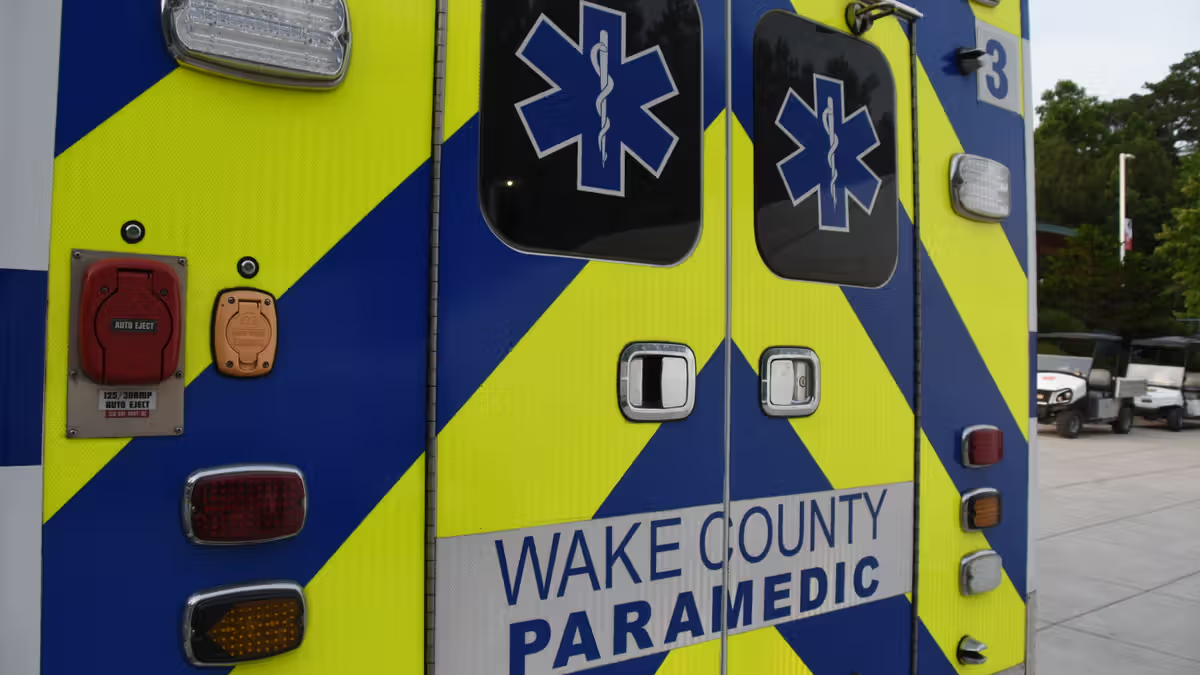
Wake County Emergency Medical Services (EMS) is set to implement a significant change in its response protocol by reducing the use of lights and sirens for non-critical calls.
This initiative is designed to enhance safety for both emergency responders and the public.
Dr. Jon Studneck, Director of Wake County EMS, emphasized the risks associated with the current practice.
"Red lights and sirens response for first responders is very dangerous," he stated.
Data from the county reveals that since January, there have been 21 accidents involving EMS vehicles using lights and sirens, resulting in two ambulances being totaled.
Fortunately, no significant injuries were reported.
Under the new policy, only about 20% of EMS calls will warrant the use of lights and sirens.
These will be reserved for the most severe emergencies, such as shootings, stabbings, or major vehicle collisions.
Currently, approximately 80% of calls receive this high-alert response.
The shift aims to reduce the potential for accidents caused by the high-speed, high-alert nature of current responses.
However, this change raises concerns about response times for less critical incidents.
Commissioner Shinica Thomas questioned the potential delays, asking if response times for lower-acuity calls could extend up to an hour.
Dr. Studneck confirmed this possibility, acknowledging that while the average response time for all incidents currently ranges between 15 to 17 minutes, less urgent cases might experience longer waits.
To address these concerns, the county plans to implement the new protocol in phases, collaborating with community partners, including 911 centers, first responders, and local leaders.
This collaborative approach aims to ensure a smooth transition and maintain public trust.
Commissioner Vickie Adamson highlighted the personal impact of potential delays, noting that for someone with a broken leg, a 60-minute wait could feel exceedingly long.
The full county board is set to review the plan, with community informational sessions scheduled to gather public input.
If approved, the policy could be fully implemented by March 2026.
This initiative reflects a growing trend among emergency services to balance rapid response with safety considerations.
By reserving lights and sirens for the most critical situations, Wake County EMS aims to reduce accidents and improve overall service efficiency.
Residents are encouraged to participate in upcoming informational sessions to voice their opinions and learn more about the changes.
Staying informed and engaged will help ensure that the community's needs are met while enhancing the safety of both responders and the public. |
0 Comments
Join the conversation
Be the first to comment
Share your thoughts above.